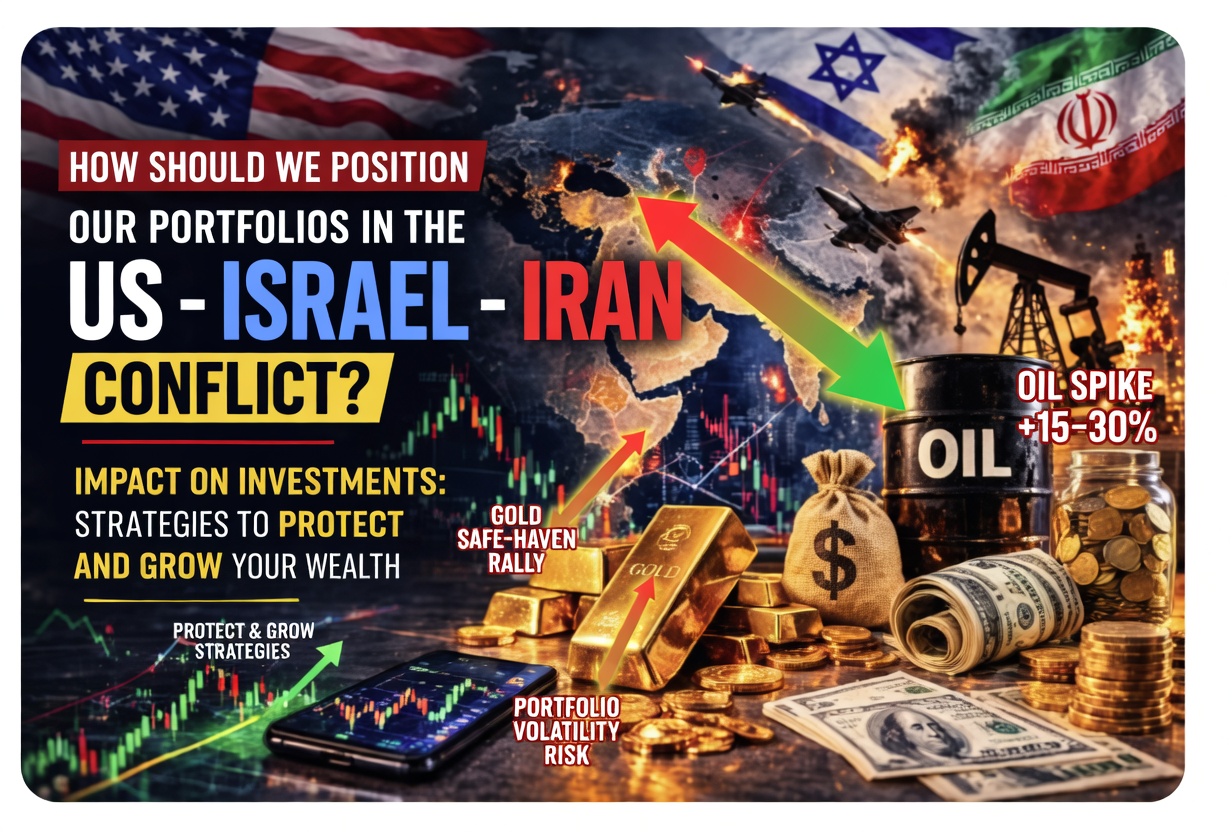
Geopolitical conflicts have always been one of the biggest sources of market volatility. The ongoing U.S.-Israel-Iran conflict has once again shaken global markets, raising concerns about energy supply disruptions, inflation, and global economic stability.
For investors, the key question is clear: How should you position your portfolio during this geopolitical crisis?
Historically, wars and geopolitical tensions tend to trigger short-term market volatility rather than long-term structural declines. However, certain sectors and asset classes often benefit from such environments while others suffer. Understanding these dynamics can help investors build a more resilient portfolio.
In this article, we explore the key portfolio strategies investors should consider amid the U.S.-Israel-Iran conflict.
Increase Exposure to Energy Stocks
One of the biggest economic risks from the conflict is disruption to global oil supply, particularly through the Strait of Hormuz, a critical shipping route that handles roughly 20% of the world’s oil trade.
If supply disruptions occur, oil prices could spike significantly, benefiting energy producers.
Why energy stocks tend to benefit:
- Higher crude oil prices increase profit margins
- Energy companies generate strong cash flow
- Many energy firms pay attractive dividends
Historically, energy stocks have outperformed during periods of geopolitical tension in the Middle East because rising oil prices shift profits toward the energy sector.
Potential beneficiaries
- Oil producers
- Oil services companies
- LNG exporters
For investors, allocating a portion of their portfolio to energy stocks can act as a hedge against rising energy prices.
Allocate to Gold as a Safe Haven
Gold has long been considered a safe-haven asset during geopolitical uncertainty.
When conflicts escalate, investors often move capital into gold to preserve wealth and hedge against inflation.

Gold tends to benefit because:
- It is a store of value during crises
- It acts as a hedge against inflation and currency volatility
- It maintains high liquidity during market stress
Asset managers have reportedly increased their allocations to gold during the current conflict as a defensive strategy against market declines.
For diversification, investors can gain exposure through:
- Gold ETFs
- Physical gold
- Gold mining stocks
Consider Defense and Cybersecurity Stocks
Geopolitical tensions often trigger higher military spending worldwide.
Governments typically increase defense budgets to strengthen national security, which benefits companies involved in:
- Weapons systems
- Missile technology
- Cybersecurity
- Defense AI systems

Defense spending globally is expected to increase significantly as nations modernize military capabilities and respond to rising geopolitical tensions.
Cybersecurity companies may also benefit as cyber warfare becomes an increasingly important aspect of modern conflicts.
Maintain Exposure to High-Quality Technology Companies
While geopolitical tensions can trigger short-term market selloffs, high-quality technology companies often recover relatively quickly.
Many large tech companies have strong:
- Balance sheets
- Recurring revenue
- Dominant market positions
Some analysts believe sectors such as cloud computing, AI, and cybersecurity remain long-term winners even during geopolitical turbulence.
Investors should focus on profitable technology companies with strong competitive advantages rather than speculative growth stocks.
Add Defensive Assets to Reduce Volatility
If the conflict escalates, global markets could experience higher volatility due to rising energy prices and supply chain disruptions.
For example, disruptions to fuel supply could push transportation and manufacturing costs higher, potentially fueling inflation globally.
Investors can manage risk by allocating part of their portfolio to defensive assets such as:
Defensive sectors
- Consumer staples
- Healthcare
- Utilities
Defensive financial assets
- High-quality government bonds
- Investment-grade credit
A balanced portfolio that combines growth assets with defensive holdings can help investors navigate uncertain markets.
Avoid Overreacting to Short-Term Market Volatility
While geopolitical conflicts can cause market declines initially, history shows that markets often recover once uncertainty fades.
Investment firms suggest viewing such events primarily as short-term volatility shocks rather than long-term structural market changes.
Instead of making emotional decisions, investors should focus on:
- Long-term investment goals
- Diversification
- Maintaining a disciplined investment strategy
Market volatility can also create buying opportunities in high-quality companies.
Building a Resilient Portfolio Amid Geopolitical Uncertainty
The U.S.-Israel-Iran conflict is a reminder that geopolitical risks can quickly impact global markets. Rising oil prices, inflation risks, and supply chain disruptions could increase market volatility in the near term.
However, investors should focus on portfolio resilience rather than panic selling.
A well-positioned portfolio during this conflict may include:
- Energy stocks to benefit from rising oil prices
- Gold as a safe-haven asset
- Defense and cybersecurity companies
- High-quality technology firms
- Defensive sectors and bonds
By maintaining diversification and focusing on long-term fundamentals, investors can navigate geopolitical uncertainty while still positioning their portfolios for future growth.
Join our newsletter and unlock access to hidden gems and top dividend stocks and REITs: https://www.smallcapasia.com/#